

Choosing between AC coupled vs DC coupled BESS is one of the most important architecture decisions in a solar-plus-storage project.
Both designs combine photovoltaic generation with battery energy storage, but they move electricity through the system differently. That difference affects the number of conversion stages, inverter and PCS configuration, retrofit complexity, clipping recovery, controls, balance-of-system design and potentially lifecycle economics.
For a solar EPC or design engineer, the decision should therefore not begin with a generic statement that “DC coupling is more efficient” or “AC coupling is easier.” The correct answer depends on what already exists at the site, whether the project is new-build or retrofit, where the grid constraint occurs, how much solar clipping is expected, and what the battery must do beyond storing PV energy.
NREL’s utility-scale PV-plus-battery modeling explicitly treats AC- and DC-coupled configurations as different system architectures. Its analysis notes that DC coupling can improve the efficiency of charging directly from PV and capture energy that would otherwise be clipped, while AC coupling uses separate PV and battery inverters and involves additional conversion steps when PV charges the battery.
That architecture question is becoming more important as solar+BESS projects increasingly require EPCs to explain power flow and conversion losses clearly to investors, utilities and asset owners.

AC Coupled vs DC Coupled BESS: The Fundamental Difference
The easiest way to understand the two architectures is to follow the energy.
AC-Coupled Architecture
In a typical AC-coupled solar-plus-storage system:
PV modules → PV inverter → AC bus
and separately:
Battery → PCS → AC bus
The PV system and BESS therefore have independent power-conversion equipment.
During PV-to-battery charging, solar electricity may follow a path such as:
PV DC → PV inverter → AC bus → BESS PCS → Battery DC
During battery discharge:
Battery DC → BESS PCS → AC bus → Load/Grid
BOOSTESS’s own BESS topology guidance describes AC coupling in the same general way: the battery connects through its own PCS while the PV system normally uses a separate inverter, with both systems meeting on the AC side.
DC-Coupled Architecture
In a DC-coupled design, PV generation and battery storage share a common DC-side architecture before electricity reaches the AC grid.
A simplified flow is:
PV DC → DC bus / DC-DC stage → Battery and shared inverter → AC grid
Depending on the detailed design, the PV array and battery may share a bidirectional inverter or other conversion equipment.
NREL’s representative utility-scale DC-coupled architecture uses a common bidirectional inverter for PV and battery storage. It identifies direct PV charging and clipping recovery as two important operational advantages of DC coupling.
Quick Comparison for Solar EPCs
Design Factor | AC-Coupled BESS | DC-Coupled BESS |
Existing PV retrofit | Often easier | Usually more intrusive |
PV inverter | Separate | May share inverter architecture |
Battery PCS | Independent PCS | May use shared conversion stage |
PV-to-battery conversions | More conversion stages | Fewer stages possible |
Clipped PV recovery | Limited by architecture | Stronger opportunity |
Independent PV/BESS operation | High | More integrated |
Grid charging | Straightforward when permitted | Design-dependent |
Controls | Relatively modular | More coordinated controls required |
New-build solar+BESS | Suitable | Often attractive |
Expansion flexibility | Often strong | Depends on shared DC architecture |
This table is a screening tool, not a universal design rule. NREL emphasizes that the highest-value architecture varies with component performance, system design, cost, grid conditions and project configuration.

Why AC Coupling Often Fits Retrofit Solar Projects
For an existing PV site, AC coupling usually allows the EPC to preserve more of the installed solar architecture.
The PV modules, strings and inverters can continue operating as an independent generation system. A BESS with its own PCS is then connected at the appropriate AC point.
This can be attractive when:
- the PV plant is already commissioned;
- existing PV inverters still have useful operating life;
- the owner does not want to redesign the PV DC system;
- battery and PV equipment come from different vendors;
- staged BESS expansion is expected;
- grid charging is part of the operating strategy.
BOOSTESS’s BESS topology guide similarly identifies AC coupling as a common option for commercial and industrial projects and as a practical architecture when storage is added to an existing PV system.
From a project-management perspective, this separation can also make responsibility boundaries clearer. The solar inverter supplier remains responsible for PV conversion, while the BESS supplier or integrator manages the battery, BMS, PCS and associated controls.
However, retrofit convenience should not be confused with guaranteed project simplicity. The EPC still needs to confirm transformer capacity, protection settings, breaker ratings, harmonic requirements, export limits, EMS integration and available point-of-connection capacity.
Why DC Coupling Can Improve PV-to-Battery Power Flow
The main technical argument for DC coupling is that solar energy can reach the battery without first being converted fully to AC and then converted back to DC.
NREL’s comparison notes that AC-coupled PV charging involves additional conversion stages and therefore has lower charging efficiency than its representative DC-coupled configuration when charging directly from PV.
This matters most when a large share of battery charging is expected to come directly from solar.
Consider a project that regularly produces excess PV at midday and discharges in the evening. If thousands of MWh per year move through the PV-to-battery pathway, even relatively small differences in conversion losses can affect lifetime energy throughput.
But EPCs should avoid turning this into a simplistic efficiency claim.
The total project efficiency also depends on:
- DC/DC conversion efficiency;
- shared inverter efficiency;
- battery charge/discharge efficiency;
- cable losses;
- transformer losses;
- auxiliary loads;
- thermal-management consumption;
- operating power level;
- battery temperature and SOC.
The correct comparison is therefore system-path efficiency, not only inverter nameplate efficiency.
DC Coupling and Solar Clipping Recovery
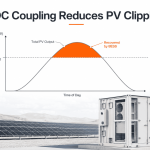
Clipping occurs when the available DC output from a PV array exceeds the AC conversion capability of the inverter.
For example, a PV array may be capable of producing 120 MWDC while the inverter system is limited to 100 MWAC. During high irradiance, some potential PV production can therefore be clipped.
A properly designed DC-coupled battery can absorb part of this energy before it is lost at the shared inverter constraint.
NREL specifically identifies the ability to capture otherwise clipped PV production as an operational benefit of DC-coupled PV-plus-battery architecture.
This is especially relevant for projects with higher inverter loading ratios.
However, clipping recovery has limits. The battery needs available SOC headroom, sufficient charging power and sufficient energy capacity at the exact time clipping occurs.
If the battery is already nearly full at noon, it cannot capture much additional solar regardless of the coupling architecture.
That is why EMS scheduling becomes part of the design.
PCS + BESS Integration Changes the Engineering Boundary
The choice between AC coupled vs DC coupled BESS for solar projects is also a choice about where power conversion responsibility sits.
In an AC-coupled project, the battery PCS is normally a distinct subsystem. It manages bidirectional conversion between the battery DC side and the site’s AC system.
That gives the EPC several design variables:
- PCS power rating;
- AC voltage;
- transformer architecture;
- centralized vs distributed PCS;
- reactive power requirements;
- overload capability;
- grid-forming or grid-following requirements;
- communication with EMS and plant controller.
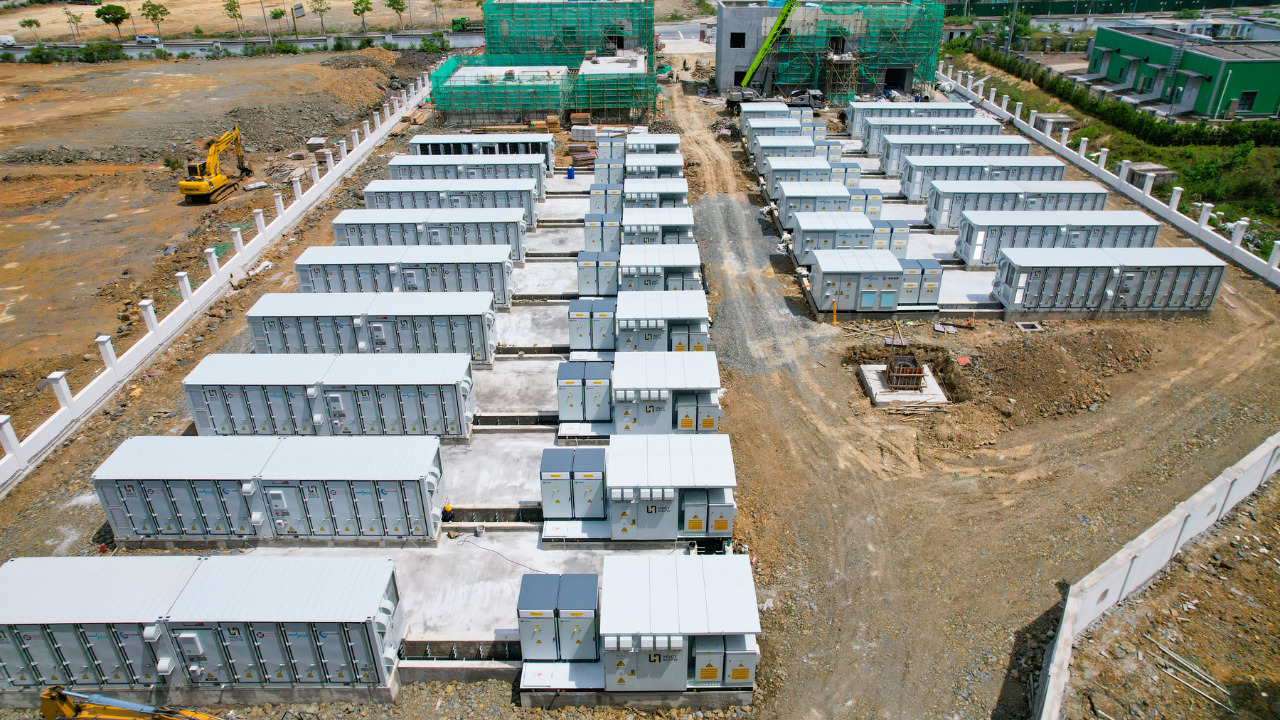
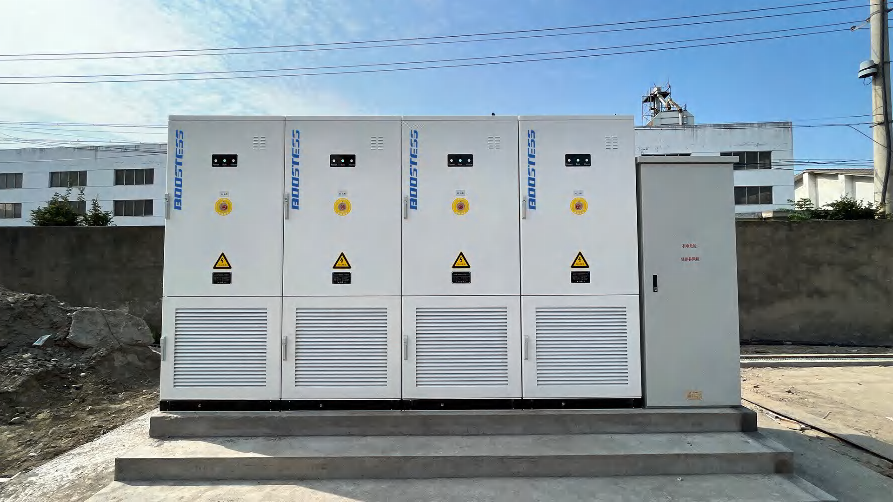
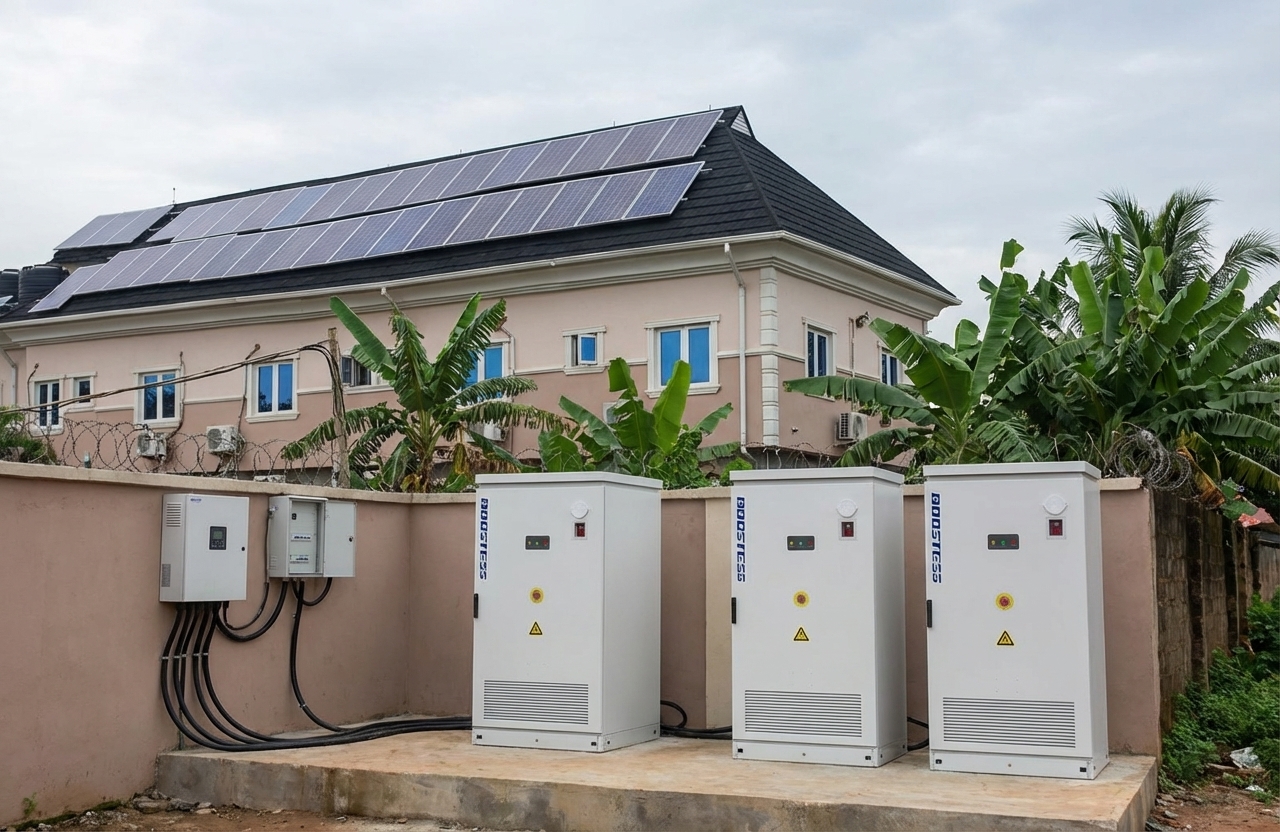
BOOSTESS’s current C&I product portfolio includes integrated cabinet systems in which PCS, battery and control functions are combined in the system architecture, while its larger containerized portfolio supports larger renewable-storage applications.
For utility-scale solar projects, the engineering boundary can be different: the BESS container, PCS, MV transformer, switchgear and plant-level controls may be supplied as separate but coordinated blocks.
The important procurement question is therefore not simply:
“Is this battery AC-coupled?”
It should be:
“Exactly which equipment performs each conversion, and who is responsible for coordinating it?”
EMS Strategy Can Matter as Much as Coupling Architecture
Hardware architecture determines which power flows are technically possible. EMS determines when they actually happen.
Recent 2026 research on behind-the-meter BESS operation demonstrates the importance of coordinating battery capacity, PV self-consumption, peak reduction, grid services and real-time SOC through scheduling and control rather than treating storage as a fixed charge/discharge device.
For solar+BESS projects, EMS may need to manage:
- PV self-consumption;
- clipping recovery;
- curtailment response;
- TOU arbitrage;
- export limiting;
- peak shaving;
- reserve SOC;
- grid services;
- backup reserve;
- battery degradation limits.
For example, if tomorrow’s solar forecast predicts strong midday clipping, the EMS may need to create battery headroom before noon.
If the battery remains at 90% SOC from an overnight charging strategy, the technical advantage of DC coupling may be largely wasted during the solar peak.
This is why power-flow design and dispatch design should be developed together.
Conversion Losses: Do Not Compare Only One Efficiency Number
Buyers often ask:
“Which system has the better round-trip efficiency?”
That is useful, but incomplete.
Different operating paths have different efficiencies.
An AC-coupled project may have:
PV → inverter → AC bus → PCS → battery
A DC-coupled project may use:
PV → DC/DC stage → battery
But when discharging, both still need to deliver useful AC power through conversion equipment.
Similarly, if the battery charges from the grid instead of PV, the efficiency advantage of direct DC solar charging no longer applies in the same way.
NREL’s modeling reflects this distinction: its DC-coupled configuration receives an efficiency benefit specifically when charging from coupled PV, while grid charging follows a different conversion path.
A procurement comparison should therefore request efficiency at clearly defined boundaries:
- PV-to-battery;
- grid-to-battery;
- battery-to-grid;
- full AC round trip;
- auxiliary consumption;
- transformer inclusion or exclusion.
Without a defined measurement boundary, efficiency percentages from two suppliers may not be directly comparable.
Which Design Is Better for Different Solar Projects?
Existing Commercial PV Site
Likely starting point: AC coupling
Why:
- existing PV inverter can remain;
- battery installation can be more modular;
- retrofit responsibility is easier to separate;
- BESS can support peak shaving and tariff optimization independently.
New C&I Solar + Storage Project
Evaluate both architectures
If the priority is deployment flexibility, independent PCS control and multiple energy sources, AC coupling may be attractive.
If direct solar charging and integrated PV+BESS optimization dominate the use case, DC coupling deserves closer analysis.
Utility-Scale New-Build PV+BESS
DC coupling may be particularly relevant, especially when clipping recovery and shared interconnection capacity are valuable.
However, EPCs must compare control complexity, DC equipment, O&M architecture and balance-of-system costs—not just energy efficiency. NREL notes that DC coupling can reduce some inverter costs while introducing additional DC/DC equipment and potentially more complex controls.
Existing Utility PV Plant Adding Storage
AC coupling is often the first architecture to study, because it can avoid major changes to the commissioned PV DC system.
But the interconnection agreement must be checked carefully. Adding storage does not automatically increase permitted export power.
Procurement Checklist: What to Ask Before Choosing
Before selecting AC or DC coupling, provide the BESS integrator with:
- PV DC capacity and AC inverter capacity.
- Existing or planned inverter loading ratio.
- Hourly or sub-hourly PV generation profile.
- Historical or modeled clipping data.
- Site load profile, if behind the meter.
- Point-of-interconnection export limit.
- Grid-charging permission.
- Required BESS MW and MWh.
- Single-line diagram.
- PV inverter make, voltage and topology.
- Required backup or islanding mode.
- EMS and SCADA interface requirements.
- Transformer and switchgear ratings.
- Future PV or BESS expansion plan.
- Local grid-code and safety requirements.
Then ask each supplier to show a power-flow diagram for at least four conditions:
- PV supplying the grid/load;
- PV charging the battery;
- battery discharging;
- PV + battery operating simultaneously.
This exposes hidden conversion stages and makes technical quotations much easier to compare.
FAQ
What is the main difference between AC coupled vs DC coupled BESS?
AC-coupled BESS normally uses a separate battery PCS and PV inverter connected through the AC bus. DC-coupled BESS integrates PV and battery on the DC side before AC conversion.
Is AC-coupled BESS better for existing solar projects?
Often yes. AC coupling can allow an EPC to retain existing PV modules and inverters while adding an independent battery PCS, making it practical for many retrofit projects.
Is DC-coupled BESS more efficient?
DC coupling can reduce conversion stages when charging directly from PV, which can improve that specific energy pathway. Actual system efficiency depends on the full design, equipment efficiency, auxiliaries and operating conditions.
Can DC-coupled BESS capture clipped solar energy?
Yes. A properly designed DC-coupled battery can capture some PV energy that would otherwise be clipped by the shared inverter, provided sufficient battery charging power and SOC headroom are available.
Can AC-coupled storage charge from the grid?
Yes, where the project configuration and local market or interconnection rules permit grid charging. The BESS PCS converts AC grid power to DC battery power.
Which architecture is better for utility-scale solar+BESS?
There is no universal winner. New-build projects with significant clipping may benefit from DC coupling, while retrofit projects may favor AC coupling. The optimum design depends on interconnection, energy flows, costs, controls and revenue strategy.
Does the EMS change between AC- and DC-coupled systems?
The control architecture differs because available power paths differ. In either case, EMS should coordinate PV, SOC, export limits, battery operating limits and the project’s commercial dispatch strategy.

 English
  Romanian
  Polish
  German
  Spanish
  Ukrainian
  Hungarian
  Albanian
  French
  Portuguese
  Italian
  Bulgarian
  Croatian
  Czech
Czech  Lithuanian
  Latvian